
World News Insights
1-3 Minute Gist
Search, personalize, or simply browse. Follow the world around you from gist and context to insights.
Who we are | Our Credo | Ways of using Lyrarc | FAQ | Send Feedback | First Letter From the Editor
Sign up. It's free and easy to use
Create an account
to personalize your feed of articles and topics.
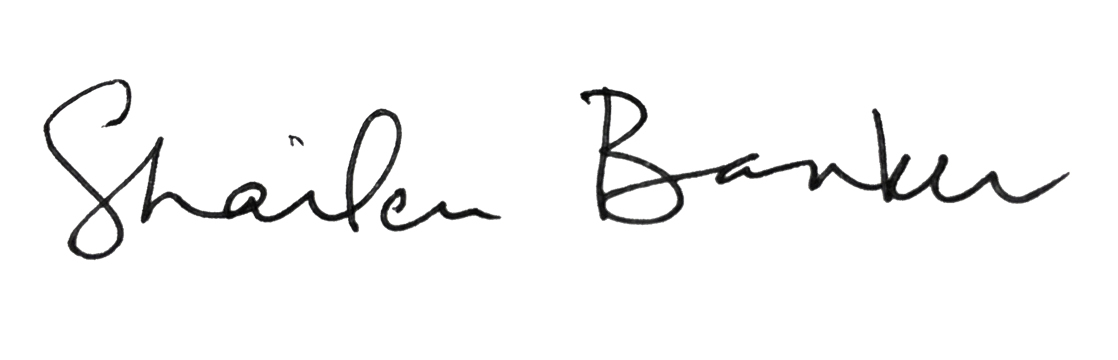
Letter from the Editor
Seventh Letter from the Editor
Dear reader,
In a positive development the Trump administration is moving to the center and traditional Republican views on trade, NAFTA, Mexico, and on economic policy. This is good for Mexico as we show in links and groups. It is also good for America's major trading partners, China and the European Union. Policy on Syrian government use of chemical weapons, and North Korean missile tests is also assertive and shows the willingness to project American power to keep different conflict areas free of chemical and nuclear weapons, a policy that has won the quiet support of China. In a sense the early problems- courts turning down travel bans, Flynn Bannon reversal episodes, failure to negotiate with Freedom Caucus Republicans, were a sort of learning experience for the new and untested administration. This also helped prove the competency of advisors such as Gary Cohen, head of the National Economic Council, covered in groups and links, who set up expert groups for trade and tax reform, and of Wilbur Ross who tapped into his long business experience to show the president "a sensible" approach would benefit both the U.S. and Mexico. Muilenburg of Boeing was also able to convince the president of the value of the Export Import Bank for U.S. exports. Trump showed a willingness to reverse himself when he was shown all the facts about a situation, and the humanity to act on the use of chemical weapons in Syria, in a direct common sense fashion that he shares with his sister, Maryanne Trump, a tough respected Judge on the U.S. Court of Appeals. During the campaign the sharp contrast between the two was evident, yet the two may have some traits in common.
Brexit Errors
The stories on Brexit in the news media show how difficult the negotiations will be, which is covered in the Top Stories section under "The tangle of Brexit negotiations." British prime minister Theresa May may be miscalculating and find her support withering away if by raising expectations she disappoints Tory backbenchers with the status quo two years from now- no agreement reached and lack of tariff free access to EU markets is a distinct possibility, requiring continuing European Court of Justice jurisdiction and free migration for the status quo. The elections called for June 8, 2017 by Theresa May in Britain are intended to strengthen May's hand in negotiations, yet there is an element of uncertainty as the elections come in a different climate than the Brexit vote in 2016. As France heads into elections In April 2017, covered in Top Stories, voters may have second thoughts about drastic change considering- the difficulties following Brexit with a gloss put on it by Theresa May, the uncertainty created for the middle class with extreme right and extreme left parties and candidates, the shift to traditional Republican views in the Trump administration, and the worsening of relations with Russia after use of chemical weapons in Syria. A lot of this happened just in the last weeks before the election and may make voters reflect on this thing called change, on words and reality, on anger and substance, on images and facts. The problems of jobs, income gains and fairness, rural urban divide, will remain whoever wins, but tackling them will require carefully understanding the facts and taking steps, not withdrawing from trade and other close relationships with neighbors developed over the years, as the Trump administration is realizing.
India and Climate Change
With all the negative news on climate change policy in the U.S., there is positive news from the the major sources of pollution where it really counts. China has committed to adhering to the Paris Climate Change agreement. India, as the Economist points out in its editorial coverage, April 1, 2017, is taking vigorous steps to pursue green energy. While coal makes up 61% of power generating capacity and 240 million Indians lack electricity, the government has announced no more coal fired power stations will be built during the next decade than ones already being built. This is partly because of electricity distribution problems and as about 40% of coal fired plant capacity is not being used. The Modi government has set the goal of tripling renewable energy capacity to 175 GW by 2022, with 50 "solar" parks of combined capacity of 40 GW approved. The push is being aided by the drop in solar electricity cost to the point where it is close to that of coal sourced electricity. In the long run there will be gains in health from using less coal, a fact that is evident from China's experience with coal. India is also using technology to tackle other problems such as management of subsidies of $40 billion for a population of 1.2 billion. About 99% of Indian adults are now enrolled in Aadhar, a project which has created a 12 digit identifying number for about 1.1 billion people with their fingerprints and iris scans recorded in a database. About $8 billion of the $40 billion was lost through false claims say government officials, and only an estimated 27% of subsidies reached the right hands, much of this loss being eliminated through Aadhar. As a delivery system for food, education, employment, healthcare and other services to a large part of the population by linking bank accounts to the digital identification system, Aadhar is a foundation for development. Other positive news is on trade. As the U.S. shift its position towards NAFTA and Mexico to a win-win attitude, there is progress in European Union trade relations with Japan after prime minister Shinzo Abe's visit to cities in the EU. EU projections show a gain of 0.76% for long term GDP as a result.As the U.S. and European Union pause to reflect on the way forward, as China reflects on its relationship in a changing world and how it can continue development beyond the current stage of a middle income country, and India reflects on the best way to modernize the entire country and South Asia, below are some thoughts on the way forward.
THE WAY FORWARD
Germany's outgoing president Joachim Gauck, undoubtedly someone who is listened to with great respect throughout Germany and outside his country, correctly touched on many of these points by asking the question- what kind of society or country we should be like? Because no other nation has taken a lead in tackling the issues facing us today, and no other nation has the will to do it born of difficult experience, and few have shown the leadership qualities and genuine concern of president Gauck in bringing people and nations together, I am unabashedly drawing from some of his immensely valuable insights. It also answers the question of what kind of society we in the West and other parts of the world would want to see.
Gauck said Germany should find "the courage to conduct discussions that include the majority to a far greater extent than has been the case to date," and to not only "encompass those who regularly take part in political discourse." Exchange and discussion, even heated discussion without resentment or prejudice, were "the oxygen of an open society and argument its enlivening element." For this to happen in Europe and America one has to accept that the plurality that existed in communication between different groups has been fractured, because of a divide developing- rural vs. urban, gainers from globalization in large urban centres and those left behind in areas outside, those in tech centres and those outside, isolated communities talking in opposition to other groups. It is important to counteract this fragmentation, by making contacts with people thinking differently or in different circumstances than one's own- "genuine discussion is often the first step on the path to compromise and the starting point for change- and thus for the development of democracy." Democracies learn, this is the essential point, and arguments based on truth, the outcome of discussions based on truth guide democracies. Fake news simply has no place here. Identity has emerged as an issue within Europe and America, as the fracturing in communication coupled with immigration has tended to create fears for identity as a people. Europeans or Americans, or Indians can value their constitutional freedoms, and still live and treasure their landscapes, culture, history, language and literature.
A sense of respect for the constitution and its founders fits well with one's culture- Gauck adds "respecting democratic constitution with universal values naturally does not mean shrugging off one's culture or ignoring traits that have developed over the course of history." Democracy lives and learns, and it is continually in the process of BECOMING, changing with new responses as new generations and new periods with their new issues emerge. The process may take time or be slow at first, this adaptability comes from exercizing political citizenship and bringing out the potential within every person. Citizenship education needs to advance to ensure respect for others and other viewpoints to enlarge the discussion that drives democracy, and for assuming responsibility for the future of the community, and for shared international norms and values. Not opposing the most egregious acts of inhumanity citizens and communities lose credibility, creating room for doubts and dissension that lead to "becoming morally jaded, or cynical," as the universality of human rights is diminished. Choosing to wait things out, the lack of prudent and decisive action, is not a default option. Here Gauck pointed out that the consequences of the U.S. limiting its action in the international sphere and allowing situations to develop had profound negative consequences for Europe, and also in America, allowing cynicism to develop. This means stabilizing the European Union and taking action to counteract internally and externally, and working with partners is a must.
Even as the situation in one part of the world the Middle East has slipped, there are positive developments that give hope in other regions. India (and South Asia) with over 1 billion people is taking on the next stage of modernization, with vibrant democracy in India, Bangladesh and Sri Lanka. This offers new hope for democracy to expand and grow and constitutional freedoms to progress. It also provides an opportunity to boost growth in the EU and the U.S. through increased trade and economic relations with India and South Asia as a whole for a shared future. Just as Germany has shown a better direction for Europe, India can show a better direction for South Asia, including areas such as Iran and Afghanistan, in peaceful coexistence and modernization. China has so much at stake in today's international order as it continues its drive for economic progress beyond that of a middle income country. Russia has responded in various ways feeling encircled by NATO expansion to its eastern borders and the situation in Ukraine, and from reduced foreign investment in the economy. This has given a feeling that things are "out of joint" or unsettled.
With patience and resilience the people of the European Union and the U.S. can overcome this period of tangled international relations, as the basic foundations laid by predecessors in the last 70 years are sound. New challenges can be met with the same courage shown by exceptional leaders in the past. George Washington reminded Americans in his draft of the First Inaugural Address, Jan 1789, that "should hereafter those who are intrusted with the management of this government, incited by the lust for power, and prompted by the supineness or venality of their constituents, overleap the known barriers of this Constitution and violate the inalienable rights of humanity: it will only serve to show that no wall of words- no mound of parchmt can be so formed as to stand against the sweeping torrent of boundless ambition and the sapping current of corrupted morals." Every generation has to find new meaning, and breathe new life into it, by living true to the values and democratic way of life- "provident in its construction and sacred in its ratification." This is true as well in other countries, for the Basic Law in Germany, and the Constitution in India, to cite just a few, with genuine pride and respect for the spirit, wisdom and efforts of those who worked hard to write it after years of difficulty and struggles.
We took a different way to help millions around the world build educated informed mindsets that affects and shapes their lives. For a future that is open, global and digital, with everyone having access to high quality information. We believe in the renewal of America, renewal of Europe, the renewal of India, the rest of Asia, Latin America and Africa. The renewal of our supply chains, health, education, infrastructure, as we rebuild our countries after the pandemic. Literacy and knowledge we believe cannot thrive and grow in a world of web bots, web crawlers, or AI. This requires human curiosity, human learning, and human imagination. We take as inspiration the saying- “One has to be free, and as broad as sky. One has to have a mind that is crystal clear, only then can truth shine in it.” Every contribution whether big or small is precious- in this crisis and ahead.
Support Lyrarc from as small as $1





Terms and Conditions | Copyright Policy | Privacy Policy | Contact Us